




Central Bank of Brazil and National Monetary Council change the methodology for calculating the minimum capital requirement for financial institutions and other authorized entities
7 min
News
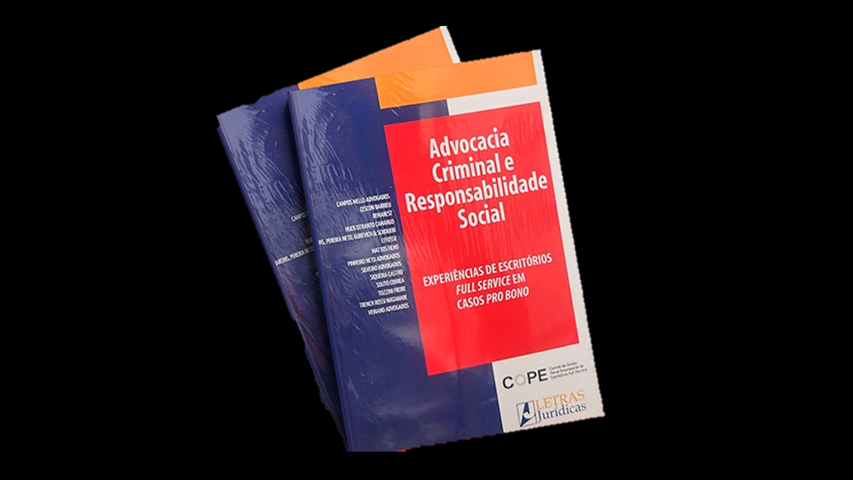
Last Monday (23), the book Advocacy in Criminal Law and Social Responsibility was launched, featuring an article co‑authored by partner Marcelo Ribeiro and attorney Gabriel Queiroz, both from Lefosse’s Corporate Criminal Law practice. The publication, Protection of the Socially Vulnerable: A Dialogue Between the Superior Court of Justice’s Case Law on Police Approaches, ADPF No. 635, and HC No. 208,240/STF, addresses significant issues and high‑impact topics related to criminal liability.
The filing of charges or continuation of criminal prosecution is prohibited when the accusation is supported exclusively by plea bargain statements or by so‑called “cross‑collaboration.”
The Federal Supreme Court ordered the dismissal of a criminal case after concluding that the accusation was based exclusively on plea bargain statements, without any autonomous corroborating evidence. The decision reaffirmed that the accusatory system does not allow charges to be filed or criminal prosecution to continue when there is no independent evidence providing the minimum threshold of admissibility, especially in investigations built on rewarded collaborations.
In the case analyzed, although the complaint referenced materials such as covert recordings, emails, financial spreadsheets, and reports from oversight bodies, the Court found that all these elements derived directly or indirectly from the plea bargain narratives themselves. As a result, there was no genuine evidentiary autonomy, characterizing the scenario known as “cross‑collaboration,” in which collaborators merely confirm each other’s versions with no external support. Given the absence of independent evidence, the Court concluded that the material presented did not meet the minimum threshold required to justify the initiation or continuation of criminal proceedings. Accordingly, recognizing the lack of just cause, the STF ordered the quashing of the criminal action.
Source: Rcl 88.345 Paraíba
Conviction for the crime of misappropriation of public funds requires proof of intent
The Federal Supreme Court held that a conviction for the crime of misappropriation of public funds requires concrete evidence of a public official’s intent to divert public resources. In the case under review, the Court concluded that the evidence presented was insufficient to support charges of misappropriation and participation in a criminal organization, as the lower courts failed to identify any elements indicating the defendants’ conscious involvement in the alleged fraud. The conviction had been based primarily on their institutional roles, without demonstrating any subjective connection to the illicit acts.
The Court noted that the irregularities, such as falsification of documents, overbilling, and manipulation of invoices, were attributable solely to the administrators of the contracted association. There was no evidence that the public officials had participated in, consented to, or been previously informed of the scheme. Moreover, the alleged misappropriations occurred even before the officials were responsible for oversight, further reinforcing the absence of criminal liability. The second‑instance decision, by presuming intent based solely on hierarchical position, improperly relied on a form of strict liability incompatible with due process.
Given the lack of evidentiary support, the Court ordered acquittal under Article 386, VII, of the Code of Criminal Procedure. It reaffirmed that criminal convictions cannot be based on assumptions or presumptions derived from the defendant’s position, and that proof of intent is essential, particularly in crimes involving public officials. The Court also dismissed the accusation of criminal organization, as the requirements of an organized structure, division of tasks, and shared criminal purpose were not met. As a result, it extended the effects of the ruling to co‑defendants who had been charged solely with this offense.
Source: HC 262.624
Consultation of the Financial Activities Control Council (COAF) for debtor information in civil enforcement proceedings is improper
The Superior Court of Justice (STJ) examined the use of atypical enforcement measures aimed at locating a debtor’s assets after traditional investigative tool (such as Infojud, Renajud, and Bacenjud) had been exhausted. The Court acknowledged that exceptional measures may be allowed to ensure the effectiveness of enforcement proceedings, provided that constitutional limits, proportionality, and the protection of confidential data are strictly observed.
In its analysis, the Court deemed appropriate only the consultation of the Customer Registry of the National Financial System (CCS), as the database contains merely registration information and does not provide access to financial balances or banking transactions. For that reason, the Court held that the measure does not violate banking secrecy or the debtor’s right to privacy. In contrast, the STJ rejected the use of COAF and SIMBA, as these systems are designed for the prevention and repression of financial crimes and are therefore incompatible with the objective of satisfying private civil claims.
Accordingly, the Court authorized access exclusively to CCS records and expressly prohibited the use of information from COAF or SIMBA (the System for the Investigation of Banking Transactions). The STJ reaffirmed that the confidentiality of financial data may only be lifted when necessary to safeguard the public interest or to investigate unlawful conduct, not for the fulfillment of private debt collection. The decision reinforces that, even when applying atypical enforcement measures, proportionality, legitimate purpose, and legal boundaries must be rigorously respected.
Source: REsp 2.197.460 – RJ
Conflicts concerning the enforcement of a Non‑Prosecution Agreement must be resolved by the Criminal Courts
The Superior Court of Justice (STJ) reaffirmed that determining the competent court to enforce the obligations set forth in a Non‑Prosecution Agreement (ANPP), depends on the inherently criminal nature of the instrument. Because the ANPP is strictly a criminal mechanism and there is no legal provision authorizing its enforcement before the civil courts, the reasoning applicable to criminal convictions that can generate civil enforcement does not apply. Accordingly, in conflicts between civil and criminal courts, jurisdiction remains with the bodies specialized in criminal matters.
In the case at hand, the Court clarified that enforcement of the obligations assumed under the ANPP must occur exclusively before the criminal court, as expressly provided in Article 28‑A, §6, of the Code of Criminal Procedure. The Court also highlighted that no legal rule allows civil enforcement of ANPP obligations, unlike the system of the Special Criminal Courts, where civil damages agreed upon in composition procedures may be enforced through the civil courts. This distinction underscores the criminal nature of the ANPP and precludes the shifting of jurisdiction to the civil judiciary.
Based on this legal framework, the STJ concluded that it is for the Criminal Panel to resolve conflicts of jurisdiction concerning the enforcement of ANPP obligations. Centralizing these matters within the criminal jurisdiction ensures coherence of the instrument, uniform interpretation, and effectiveness of the agreement, whose purpose is to avoid criminal prosecution through compliance with conditions supervised by the criminal court. Thus, the Court consolidated the understanding that compliance with ANPP terms must remain under the exclusive oversight of the criminal justice system.
Source: CC 210.253-DF
For purposes of offering a Non‑Prosecution Agreement (ANPP), each offense must be assessed individually rather than by summing the minimum penalties in cases of material concurrence
The Court of Justice of Mato Grosso held that, in determining the objective requirement of a minimum penalty of less than four years for the offering of a Non‑Prosecution Agreement (ANPP), each offense attributed to the defendant must be evaluated separately. The Court rejected the practice, adopted by some courts, of adding the minimum penalties in cases of material concurrence of crimes, noting that such an approach lacks legal basis and operates to the detriment of the defendant.
The decision emphasized that the statute does not expressly regulate how to proceed when multiple offenses are involved. For that reason, the Court applied by analogy the rationale of Article 119 of the Penal Code, which treats each offense independently for purposes of calculating prescription. Thus, if each offense, considered individually, carries a minimum penalty of less than four years, an ANPP may be offered even where there is material concurrence of crimes, provided that the remaining legal requirements are satisfied.
The panel also stressed that a refusal to offer an ANPP must be grounded in concrete circumstances and cannot rely solely on the abstract seriousness of the offenses or the mere existence of multiple charges. In the case under review, the Court even identified evidentiary weaknesses in some of the accusations, further supporting the suitability of the agreement. Ultimately, the Court approved the ANPPs executed between the parties and established specific conditions for their fulfillment.
Case: Process 0001157-74.2015.8.11.0042
Shareholders may only be held liable for a company’s tax debts when they effectively exercise management functions; mere participation in the corporate structure is insufficient
The Federal Regional Court of the 3rd Region reaffirmed that imposing personal liability on shareholders or managers for a company’s tax debts requires proof of actual management activity. The mere inclusion of a person’s name in the company’s formation documents is not enough. As reiterated in the judgment, Article 135 of the National Tax Code requires evidence that the individual exercised management powers and engaged in acts performed with excess of authority or in violation of the law, the articles of incorporation, or the bylaws. Automatic liability based solely on formal membership in the corporate structure is therefore inadmissible. This interpretation underscores the exceptional nature of third‑party tax liability and rejects presumptions derived exclusively from the corporate bond.
In the case under review, the Court noted that although the appellants were listed as shareholders, the evidence showed that they did not hold decision‑making authority, nor did they participate in the company’s financial or operational management. In the absence of elements demonstrating that the formally appointed shareholders had managerial involvement, the Court dismissed the attribution of liability, recognizing that there was no subjective connection to the alleged unlawful conduct.
Ultimately, the TRF3 concluded that tax liability cannot be imposed on individuals who do not perform administrative or managerial functions and who do not exercise any degree of interference in the company’s decision‑making routine.
Source: Case No. 0001307-41.2006.4.03.6181
Ordinance No. 1,122/2026 of the Ministry of Justice and Public Security establishes the National Protocol for Eyewitness Identification in Criminal Proceedings, setting mandatory technical guidelines for the Federal Police and the National Security Force, and optional guidelines for the Civil Police. The ordinance provides detailed rules for both in‑person and photographic identification procedures, requiring non‑suggestive preliminary interviews, the use of similar‑looking fillers, complete audiovisual recording, preservation of the chain of custody, and the prohibition of practices known to be unreliable, such as generic mug books or suggestive one‑person showups.
The ordinance also authorizes the controlled use of artificial intelligence to generate lineup images, provided that visual neutrality, phenotypic diversity, traceability, and formal documentation are ensured.
The protocol includes specific chapters addressing procedures involving children, adolescents, and persons with disabilities, as well as rules for voice identification. These provisions incorporate scientific evidence on cognitive vulnerabilities and the risks of memory contamination. By standardizing procedures, strengthening safeguards, and aligning investigative practices with international best‑practice standards, the ordinance seeks to reduce wrongful convictions, prevent discriminatory outcomes, increase the reliability of identification evidence, and reinforce legal certainty in criminal investigations across the country.
Source: Ordinance No. 1,122 of January 5, 2026, of the Ministry of Justice and Public Security
Ordinance No. 1,123/2026 of the Ministry of Justice and Public Security establishes the National Criminal Information System (Sinic) as the new official and unified national database for criminal information. The system is designed to consolidate, manage, and standardize data arising exclusively from formal acts of criminal prosecution, such as indictments, formal charges, and convictions.
Sinic integrates, within a single national platform, records concerning individuals convicted of serious crimes, including criminal organizations, sexual violence against children and adolescents, rape, racism, and judicial restrictions related to security measures in sports arenas. The ordinance expressly prohibits the inclusion of preliminary or informal data, such as police incident reports or anonymous tips. In addition, Sinic becomes the exclusive source for issuing the National Criminal Certificate and the National Criminal Records Report, which will progressively replace documents currently issued by courts, civil police departments, and state identification institutes.
The ordinance also establishes mechanisms for integration and interoperability between Sinic, public security agencies, and the justice system, including provisions for technical cooperation with the National Council of Justice and full compliance with personal data protection regulations. Anonymized data may be used for producing official statistics, formulating public security policies, and improving criminal prosecution strategies, thereby enhancing the rationality of the system and strengthening legal certainty in the handling of criminal information.
Source: Ordinance No. 1,123 of January 5, 2026, of the Ministry of Justice and Public Security
Complementary Law No. 225/2026, which established the Taxpayer Defense Code, introduced significant criminal-law changes by redefining the legal effects associated with the status of a recurrent (or persistent) debtor, particularly in cases of social security misappropriation (Article 168‑A of the Criminal Code) and evasion of social security contributions (Article 337‑A of the Criminal Code). The law now prohibits the application of traditional mechanisms for extinguishing criminal liability—such as full payment, confession, or installment of the debt—when the individual has previously been formally declared a recurrent debtor in a final administrative decision and is listed in Cadin. This change removes benefits that historically mitigated criminal consequences in tax-related offenses of this nature.
The law further provides that the subsequent removal of the taxpayer’s status as a recurrent debtor does not retroactively benefit the individual, meaning that acts committed during the period in which the taxpayer held that classification remain subject to the aggravated criminal repercussions associated with it.
Source: Complementary Law No. 225/2026
GEICO filed a lawsuit in the U.S. District Court for the Eastern District of New York accusing Dr. Bhargav Patel and his clinic of operating a fraud scheme within New York’s “no‑fault” auto insurance system. According to the insurer, between 2019 and 2023 the defendants submitted approximately US$ 3.4 million in reimbursement claims for unnecessary, experimental, excessive, or never‑performed treatments, and also engaged in illicit practices such as paying kickbacks for patient referrals and using unlicensed personnel to provide services.
After the federal action was filed, the defendants initiated more than 600 collection lawsuits in state courts and arbitration proceedings seeking to recover over US$ 2 million related to the same disputed charges. Faced with the risk of inconsistent decisions and fragmented litigation, GEICO obtained a preliminary injunction staying all parallel proceedings and barring new filings until the federal case is resolved. The court found that GEICO had shown a risk of irreparable harm, serious questions going to the merits, and that the balance of hardships favored the insurer. It also held that the injunction was warranted under the “in aid of jurisdiction” exception to the Anti‑Injunction Act.
On appeal, the U.S. Court of Appeals for the Second Circuit affirmed, holding there was no abuse of discretion. The court concluded the injunction was necessary to prevent irreversible harm to GEICO and to enable a unified adjudication of the alleged fraud scheme. It further held the measure did not violate the Anti‑Injunction Act because it was expressly authorized by RICO, following recent precedent in State Farm v. Tri Borough NY Medical Practice. As a result, the order staying the state and arbitration proceedings was fully maintained.
Source: Docket: 24‑191
The defendant, the owner of a clean‑energy startup, deceived investors by submitting falsified documents, including forged contracts, altered financial statements, and fabricated signatures. Through these schemes, he obtained nearly US$ 1 million, diverting much of the funds for personal use and concealing movements through rapid transfers among accounts. He also repeatedly lied to investors and federal agents about the use of funds and the status of the business.
He was indicted by a federal grand jury for wire fraud, mail fraud, aggravated identity theft, money laundering, unlawful monetary transactions, obstruction of justice, and false statements. After a nine‑day trial, the jury convicted him on all counts. The court sentenced him to 72 months’ imprisonment and ordered approximately US$ 1.2 million in restitution.
On appeal to the Third Circuit, the defendant challenged the sufficiency of the evidence, the jury instructions, the constitutionality of the aggravated identity theft offense, and the denial of a good‑faith instruction. The court affirmed the convictions and the sentence in full.
Source: Docket: 24‑1998
This case involves a defendant who, after losing his license to practice law, engaged in fraudulent schemes—including romance scams and business email compromise (BEC) fraud—that caused multimillion‑dollar losses to victims. He opened bank accounts in the names of shell companies, received proceeds from fraud perpetrated by accomplices, and moved the funds for personal use or to continue the illicit activities. Even after being questioned by bank investigators, he continued engaging in fraudulent conduct.
The defendant had previously been convicted in the District of Massachusetts of offenses including wire fraud and conspiracy to launder money. On a prior appeal, the First Circuit affirmed only part of the convictions and remanded for resentencing. On remand, the district court imposed a sentence of 87 months’ imprisonment, below the Guidelines range (108 to 135 months), and reinstated restitution exceeding US$ 2 million. The defendant appealed again, challenging both the reasonableness of the sentence and the scope of restitution.
The First Circuit rejected all claims. The court concluded that the Guidelines were correctly applied, including the base offense level, the loss calculation, and enhancements for money laundering and use of sophisticated means. It also found the sentence substantively reasonable and fully affirmed restitution, including that related to a foreign victim, because the loss occurred through a U.S. bank account. The sentence and restitution order were affirmed in their entirety.
Source: Docket: 24‑1831